Loading page
The first neuromodulator appointment should be conservative
The commonest regret is not too little. What an overtreated upper face actually looks like, why the dosing asymmetry only points one way, and what a well-judged first appointment should and should not do.

Narges, Founder & Medical Director
5 min read
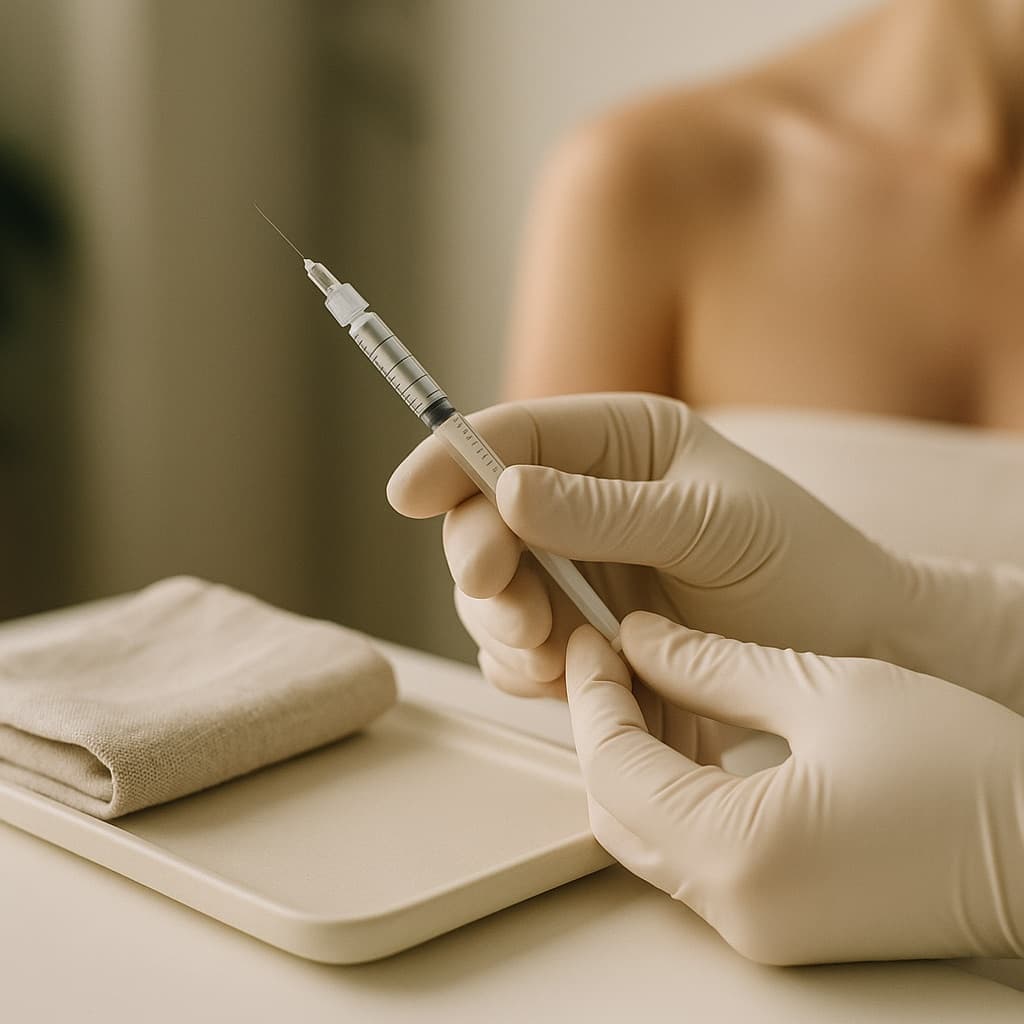
The most common regret we are asked to correct is not that somebody had too little. It is that a first appointment was dosed for a result the person had seen in a photograph, on a face that was not theirs, and then took three months to wear off.
What too much actually looks like
Not the caricature. A genuinely overtreated upper face is subtler and stranger than the frozen forehead of a magazine article, and the tell is almost always a mismatch.
The forehead is smooth and entirely still while the lower face is fully animated, so the face reads as two people. Or the brows sit lower than they did, because the frontalis — the only muscle that lifts them — was treated too heavily and too low, and the eyelid platform looks crowded. Or the centre of the forehead is relaxed while the outer fibres are not, and the brow tails climb into a permanent arch. That last one is easy to correct and unmistakable once you have seen it.
There is also true eyelid ptosis, where product reaches the levator and the upper lid itself droops. It is uncommon, it is not the same thing as a heavy brow, and it does resolve — but it takes weeks, and drops only partly compensate in the meantime.
The version nobody photographs is the loss of signal. A face communicates agreement, concern and interest largely through the upper third. Remove all of it and people who know you will say you look well, and then ask, twice, whether you are annoyed with them.

Why we start low
Muscle mass varies more than people expect. Men typically need more. So do people who lift heavily, and so do some very expressive faces with no obvious marker at all. There is no reliable way to know where a particular frontalis or corrugator sits on that range before treating it once. Published dosing ranges are wide precisely because the response is.
The asymmetry that governs the decision is this: adding is easy and removing is impossible. If we are under-dosed at the two-week review, the correction takes five minutes and a few units. If we are over-dosed, there is nothing to be done except wait ten to fourteen weeks. That asymmetry only points one way, and it is the whole argument for starting at the lower end of the range on a face we have not treated before.
From reading to treatment
Injectables
The treatments this article is about, with the real duration and the price in Canadian dollars. A consultation comes first either way.
Anti-Wrinkle Injections — Botox (one area)
Reduces how forcefully the forehead, frown and crow's-feet muscles contract, so it treats lines that appear on movement rather than creases already set at rest. Visible from day three, settled and reviewed at two weeks.
30 min

Treatments5 min read
Your first consultation: what actually happens
Forty-five minutes, no treatment on the day unless you ask for it, and a written plan you can take home. What a first consultation actually involves.
When you are ready
Ask us in person
Reading is a good start. Forty-five minutes in the room is where we look at your face in good light, ask what you have already tried, and tell you what we actually think.
Or call (416) 834-0730