Loading page

How it works
Why the growth cycle decides everything
A hair-removal laser targets pigment in the follicle, converts light into heat and damages the structures that produce the hair. It only affects follicles in their active growing phase at the moment of treatment, and at any given time only a fraction of the hair in an area is in that phase. That single fact explains almost everything about how the treatment is scheduled.
What to expect
Why it takes a course
Sessions are spaced four to six weeks apart on the face and six to ten weeks on the body, matching the growth cycles of those areas. Most people need six to eight sessions for a substantial reduction, with occasional maintenance afterwards.
The accurate clinical term is permanent hair reduction; anyone describing permanent removal in a single visit is describing something other than the biology.
The device
Two wavelengths, matched to your skin
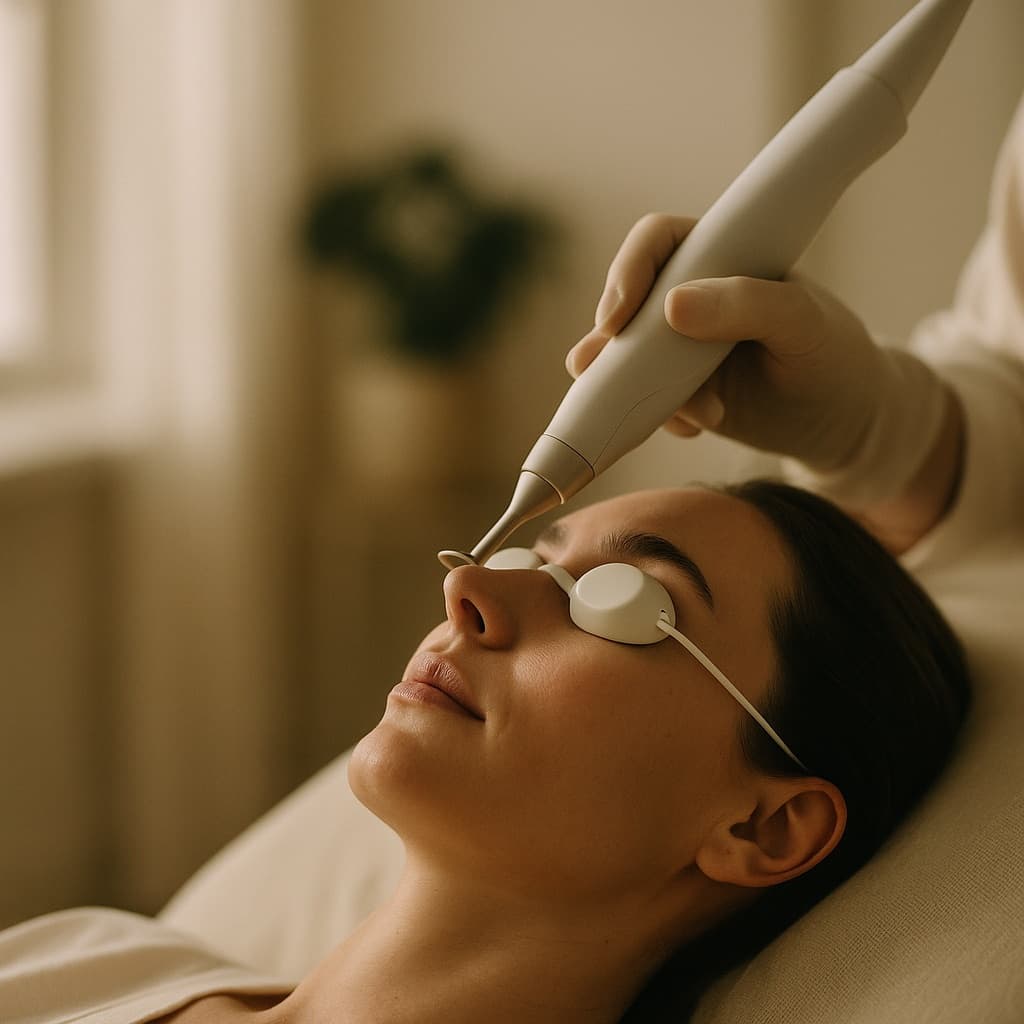
We use a Candela GentleMax Pro, which carries two wavelengths. The 755 nm alexandrite is strongly absorbed by melanin and efficient on lighter skin with dark hair. The 1064 nm Nd:YAG penetrates deeper and is absorbed far less by pigment in the epidermis, which makes it the appropriate choice for Fitzpatrick IV to VI skin. Both deliver a cryogen cooling burst milliseconds before each pulse, and every course starts with a patch test.
What it will not do
The hair it cannot treat
Pale, red, grey and fine vellus hair contains too little pigment to absorb the light and responds poorly.
We will tell you that at the consultation rather than sell you a course that cannot work.
Hormonal drivers such as polycystic ovary syndrome keep generating new hair, in which case laser manages the problem well but as ongoing maintenance rather than a finite course.
How to prepare
Preparation, and why it is not optional
Preparation is simple and not optional. Shave the area twelve to twenty-four hours before; stop waxing, threading, plucking and epilating four weeks before the first session and for the whole course, because the laser needs the follicle intact and the root present. Avoid sun and self-tanner for two weeks either side. Several common medications increase photosensitivity, so bring your list.
On the day
What the appointment is like
Treatment feels like a hot elastic snap and takes anywhere from ten minutes for an upper lip to an hour for full legs. Afterwards expect redness and small raised bumps around the follicles for a few hours. Treated hairs appear to grow for one to three weeks and then shed; that is expected, and it is not regrowth.
Treatment is performed by a certified laser technician under physician-supervised clinic protocols.
What to expect
How a course usually runs
The shape of a course is the same whichever treatment your plan settles on. What changes is how many appointments sit inside it and how long the result takes to appear.
Consultation and photographs
About 45 minutesWe take a medical history, assess the concern in good light — at rest and in animation where that matters — and take standardised photographs. You leave with a written plan carrying prices and timelines. Nothing is treated on the day unless you ask, you are medically suitable, and you have had time to read the consent form.
The treatment
The appointment itself is usually the shortest part. Your plan states the length of each visit. Consent is confirmed again before anything begins, and you can stop at any point.
Settling
Days to weeksHow quickly a change appears depends on the mechanism. A treatment that relaxes a muscle shows over days; anything that works by remodelling collagen keeps developing for weeks after the visit, which is why the result is judged later rather than in the mirror on the way out. Your aftercare sheet goes home with you and is in your portal.
Your review
Two weeks laterWe photograph you again under the same conditions and compare properly, rather than from memory. This is where a small adjustment costs nothing. It is included in the price of the treatment, not booked as an extra appointment.
The rest of the course, if there is one
Where a course is needed, sessions are spaced to the biology rather than to the diary, and we reassess before each one. If the photographs do not show the change we expected, we say so and change the plan.
Who it is for
What we check before treating
Suitability is decided at the consultation, not at booking. These are the things that most often change a plan — or postpone it — and every one of them is asked about before anything is treated.
- Waxing, threading and plucking
- Stop waxing, threading, plucking and epilating four weeks before the first session and for the whole course. The laser needs the follicle intact and the root present.
- Photosensitivity, sun and self-tanner
- Several common medications increase photosensitivity, and sun or self-tanner within two weeks either side of a session changes what is safe to deliver. Bring the full list.
- Medication and supplements
- Blood thinners, fish oil and high-dose vitamin E increase bruising. Some antibiotics and acne medications increase light sensitivity. Bring the full list, including anything over the counter.
- Pregnancy and breastfeeding
- Injectable treatment is not performed during pregnancy or while breastfeeding. Some facials and skin treatments are appropriate — tell us at booking and we will advise what is suitable.
- Skin and healing history
- Isotretinoin requires a waiting period before energy-based treatment, and a history of keloid scarring or cold sores changes both the plan and the aftercare.
- The condition of the area today
- Active infection, broken skin or recent sunburn in the treatment area means we postpone. It is a delay of weeks, not a refusal.
- Whether treatment is the right answer
- If we think the concern is better served by a retinoid, by daily sun protection, or by leaving it alone, we will say so. Declining on the day is a normal part of practising this way.
Related
Other concerns people ask about
Fine Lines & Wrinkles
The first lines to appear are usually the ones you make on purpose. Softening them is a question of movement, not erasure.
Volume Loss & Facial Contour
Faces do not only sag; they deflate. Working out where volume has actually gone is what separates a refreshed result from an overfilled one.
Skin Texture & Scarring
Enlarged pores, roughness and the shallow craters left by acne are all scaffold problems, and the scaffold sits below where any cream can reach.