Loading page
Microneedling or radiofrequency microneedling?
Same needles, different energy. One treats the surface scaffold; the other adds controlled heat at depth. How we choose between them, and what each costs you in downtime.

Maryam, Clinic Manager & Aesthetician
6 min read
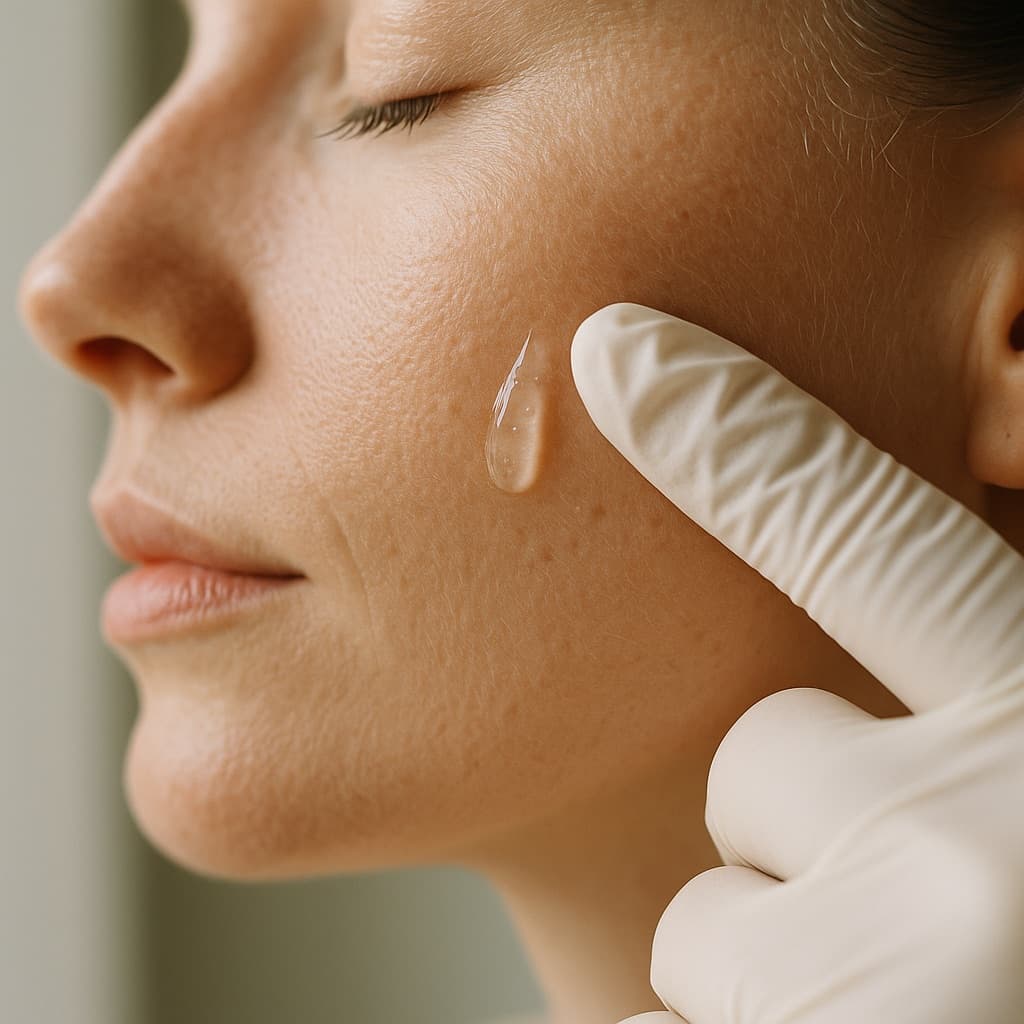
These two treatments are frequently presented as versions of the same thing at different prices. They are not. The needles are similar; what is delivered through them is not, and that difference decides which one is appropriate for you.
Conventional microneedling uses a motorised device to create thousands of vertical microchannels in the skin at a controlled depth, usually between half a millimetre and two and a half. Each channel is a tiny, sterile wound. The healing response to a field of tiny wounds is the entire point: fibroblasts are activated, new collagen and elastin are laid down over the following weeks, and the dermal scaffold beneath the surface improves. Nothing is heated. Nothing is removed.
Radiofrequency microneedling uses insulated needles that deliver radiofrequency energy from their tips once they are at depth. So you get the mechanical stimulus of the needle plus a controlled thermal injury in the deeper dermis, without heating the surface of the skin. Heat does two things collagen induction alone does not: it contracts existing collagen fibres immediately, and it produces a stronger, deeper remodelling response.
That gives a fairly clear division of labour.
Microneedling is our choice for generalised roughness, enlarged pores, dullness, fine lines, early or shallow acne scarring, and for anyone who wants meaningful improvement with modest downtime. It is dependable across all skin tones because no pigment is being targeted and no heat is applied, which makes it a reliable option where light-based treatment carries pigmentation risk. It pairs well with a good home routine and costs less per session.
Radiofrequency microneedling is our choice for deeper problems: rolling and boxcar acne scars, textural change accompanied by laxity, enlarged pores with looseness, jawline and lower-face softening, and skin quality on the neck. It reaches depths conventional needling cannot usefully exploit, and the contraction of tissue does something for firmness as well as texture.

The trade-offs are real. Radiofrequency microneedling is more uncomfortable — we use topical anaesthetic and allow forty-five minutes for it to work. Downtime is longer: pronounced redness and swelling for two to four days rather than one to two, a faint grid pattern visible for a day, and dryness for a week. It costs more. And it needs more care in darker skin tones, where excessive thermal energy can provoke post-inflammatory pigmentation, so we treat conservatively and space sessions generously rather than pushing settings.
From reading to treatment
Injectables
The treatments this article is about, with the real duration and the price in Canadian dollars. A consultation comes first either way.
Anti-Wrinkle Injections — Botox (one area)
Reduces how forcefully the forehead, frown and crow's-feet muscles contract, so it treats lines that appear on movement rather than creases already set at rest. Visible from day three, settled and reviewed at two weeks.
30 min
Treatments5 min read
The first neuromodulator appointment should be conservative
The commonest regret is not too little. What an overtreated upper face actually looks like, why the dosing asymmetry only points one way, and what a well-judged first appointment should and should not do.
When you are ready
Ask us in person
Reading is a good start. Forty-five minutes in the room is where we look at your face in good light, ask what you have already tried, and tell you what we actually think.
Or call (416) 834-0730