Loading page
Melasma through a Toronto summer
Melasma is heat-sensitive, hormone-influenced and chronic. Why aggressive treatment backfires, and what a protective, seasonal plan looks like here.

Maryam, Clinic Manager & Aesthetician
6 min read
Melasma is the condition most likely to be treated badly, and the reason is that it looks like sun damage and behaves like something else entirely.
Sun spots are discrete, they have edges, and they respond well to being targeted directly. Melasma is diffuse, symmetrical and blotchy, typically across the cheekbones, upper lip, forehead and jawline. It is influenced by hormones — pregnancy, the combined oral contraceptive pill, hormone therapy — and it is provoked by heat as well as by ultraviolet light. That last part surprises people. Infrared radiation and ordinary ambient heat can trigger a flare without any visible burn.
It is also chronic. Melasma is managed rather than cured, and the honest framing at a first appointment is that we are aiming for control, with better periods and worse ones, over years. Anyone offering to remove it permanently in a course of six sessions is not describing melasma.
Aggressive treatment makes it worse. High-energy laser, hot ablative resurfacing and enthusiastic peels can all produce a rebound darker and more stubborn than the starting point, particularly in Fitzpatrick III to V skin. The pattern we see most often is someone who got a good result from an intense treatment elsewhere, flared six weeks later, and has been chasing it since.
What actually works is unglamorous and cumulative.
Photoprotection first, daily and year-round rather than seasonal. Broad-spectrum SPF 50 reapplied through the day and — this matters specifically for melasma — a tinted formulation containing iron oxides, which block visible light that a conventional sunscreen does not. Add a wide-brimmed hat. Sit back from the fire pit and step away from the oven; heat counts.
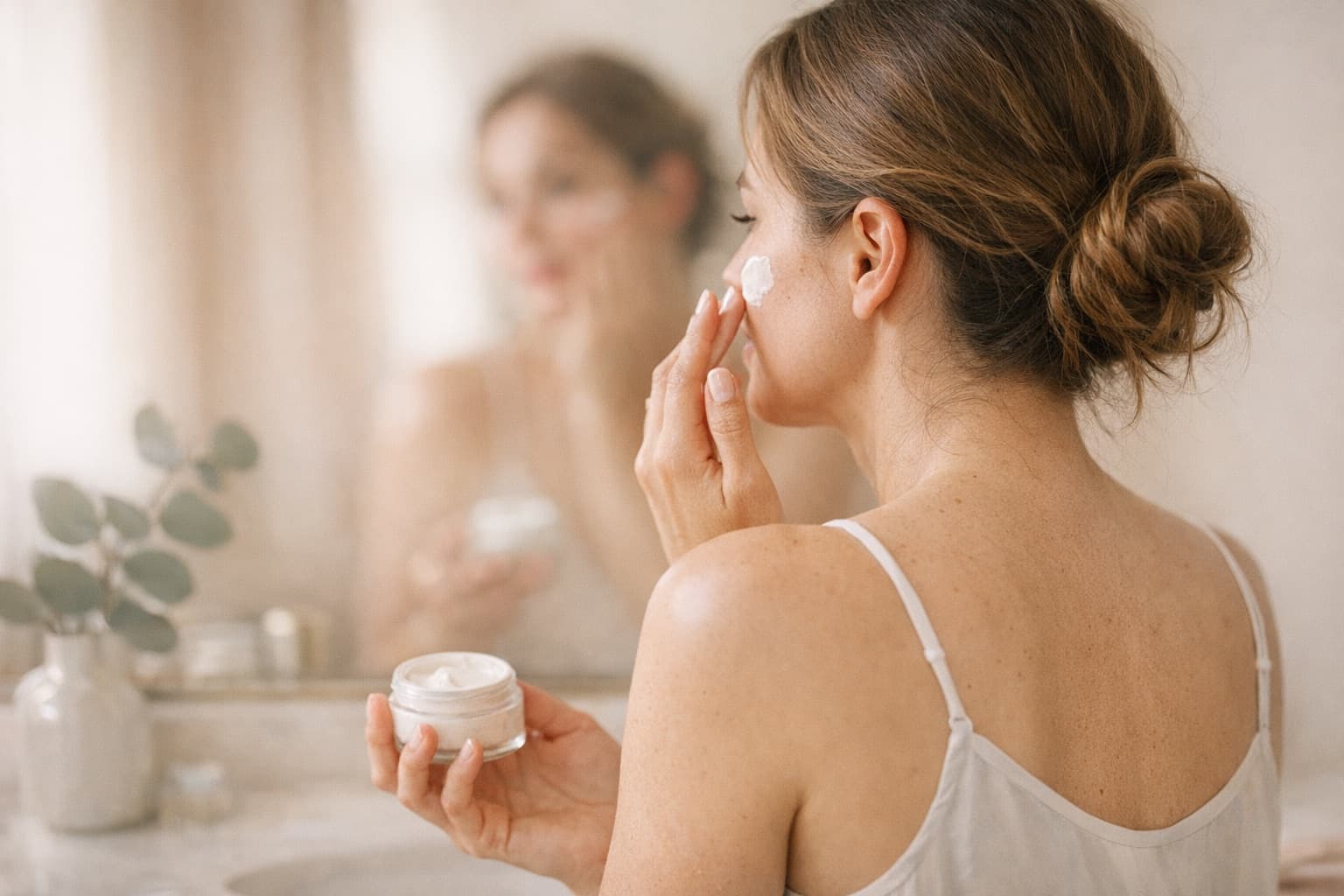
Second, a topical routine with evidence behind it. Depending on your skin and what you can tolerate, that typically involves a tyrosinase inhibitor, a retinoid at a frequency your skin will accept, and an antioxidant in the morning. Hydroquinone has a role, in courses, under supervision, and not indefinitely. This part takes three months before it can be judged, which is where most people give up.
Third, gentle in-clinic support once the topical routine is established and stable — never as the opening move. Low energy, conservative settings, generous spacing. We photograph in standardised lighting at every visit, because month-to-month change in melasma is slow enough that memory is unreliable in both directions.
From reading to treatment
Skin Treatments
The treatments this article is about, with the real duration and the price in Canadian dollars. A consultation comes first either way.
Facial
Cleanse, exfoliation, extraction and mask, adjusted to what the skin is doing that week. It maintains skin and settles congestion. It does not remodel texture or scarring — that is a course, not a facial.
1 h
Skin health5 min read
Melasma is not sun damage
One responds well to light-based treatment. The other gets worse. How to tell melasma from sun damage, why heat is the trigger nobody mentions, and what a good outcome honestly looks like.
When you are ready
Ask us in person
Reading is a good start. Forty-five minutes in the room is where we look at your face in good light, ask what you have already tried, and tell you what we actually think.
Or call (416) 834-0730