Loading page
What a laser course actually involves
Six sessions is not the plan; the spacing is. Patch tests, growth cycles, wavelength by skin type, the real downtime for each kind of treatment, and the list of people who should wait.
L
Leila, Laser Technician
5 min read
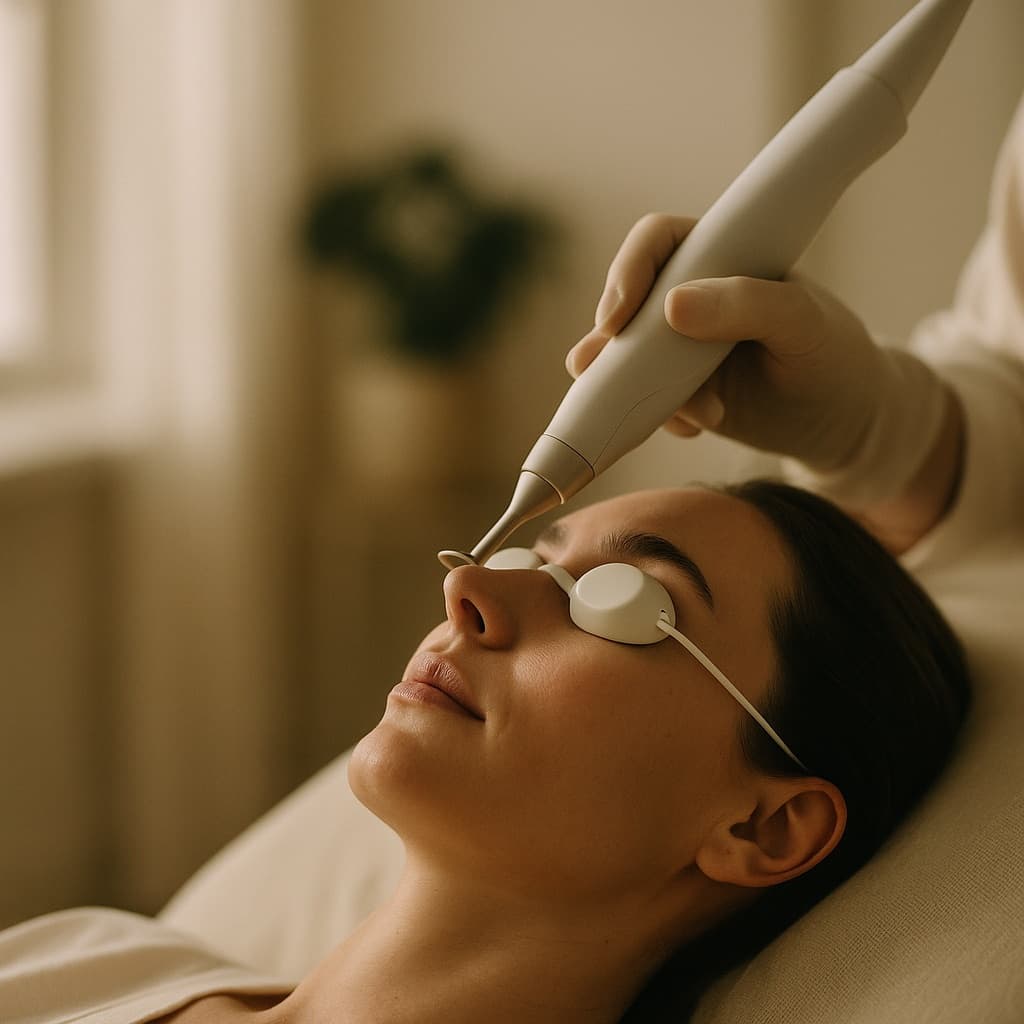
Laser is sold in sessions and delivered as a schedule. The number on the package is the least useful part of it. What determines whether a course works is the spacing, the settings, the patch test, and whether the person finishes.
The patch test, and why it is two weeks and not two days
Every course starts with a test patch at the settings we intend to use, in a discreet area of the same skin. We then wait ten to fourteen days before the first full treatment.
The wait is the point. An immediate reaction — redness, swelling around the follicles — tells us the energy reached its target, and it is visible within minutes. The reaction that actually matters is the delayed one. Post-inflammatory hyperpigmentation appears at seven to fourteen days, and a clinic that patch tests on Monday and treats on Wednesday has tested for the wrong thing.
Hair reduction is governed by the growth cycle, not the calendar
A laser can only destroy a follicle during the active growth phase, when the hair shaft is attached and pigmented enough to conduct heat down to the stem cells. At any moment only a proportion of the follicles in an area are in that phase, which is why one session cannot work, and why the interval between sessions is set by the area rather than by convenience.
- Face and neck: four to six weeks.
- Underarms and bikini: six to eight weeks.
- Legs, back and chest: eight to twelve weeks.
Six to eight sessions is typical for a substantial reduction, more on the face. Hormonally driven hair — polycystic ovary syndrome, thyroid disease, some medications — behaves differently and usually needs maintenance indefinitely. That is worth establishing before a course begins rather than after the fifth session.
The accurate term is permanent hair reduction, not removal. The realistic outcome is a large and lasting decrease in density and in the thickness of what remains, with occasional maintenance. Anyone promising the end of hair is describing something the technology does not do.
Skin type decides the wavelength
From reading to treatment
Laser Hair Removal — Women
The treatments this article is about, with the real duration and the price in Canadian dollars. A consultation comes first either way.
Laser Hair Removal — Upper Lip
Laser hair removal on the Candela GentleMax Pro, wavelength matched to your skin tone. Shave the area the day before; no waxing, plucking or sun for the weeks around each session. Most people need a course of sessions spaced to the hair's growth cycle.
10 min
Laser6 min read
Laser hair reduction: why we start courses in the autumn
Tanned skin and hair-removal lasers compete for the same light. Why we start most courses in October, and what to do in the four weeks before your first session.
When you are ready
Ask us in person
Reading is a good start. Forty-five minutes in the room is where we look at your face in good light, ask what you have already tried, and tell you what we actually think.
Or call (416) 834-0730